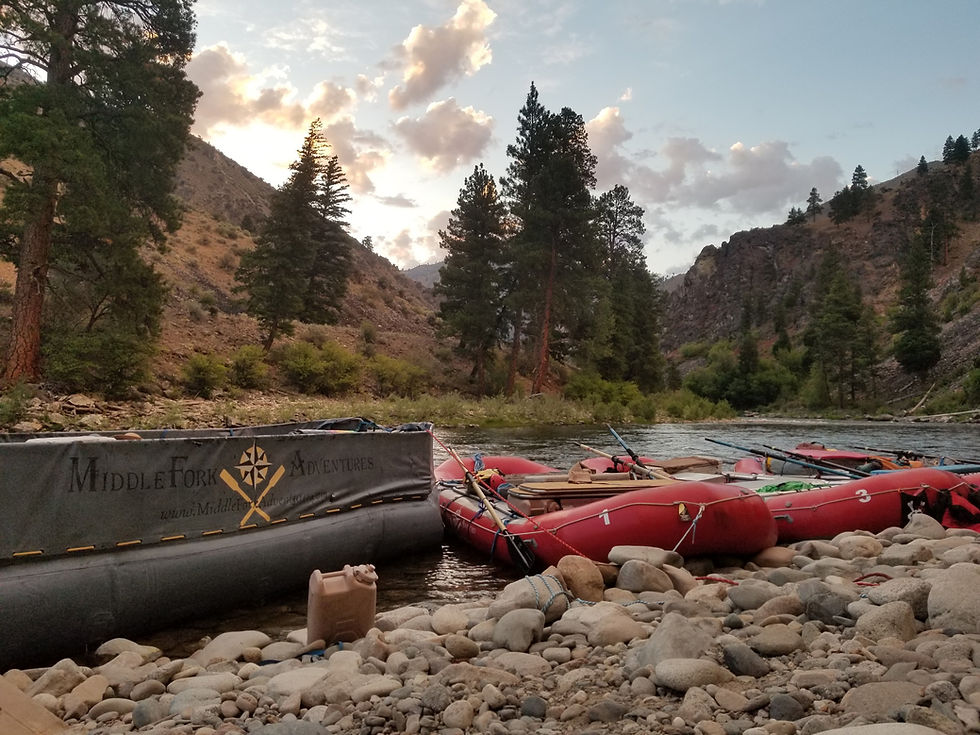
The Frank Church Wilderness in Idaho: What It Is and Why It Matters


The Frank Church Wilderness is the huge, roadless stretch of central Idaho that the Middle Fork of the Salmon runs through, and it’s where we spend every summer. Its full name is the Frank Church–River of No Return Wilderness, though most people who know it just call it the Frank.
People usually hear about it for the first time while planning a rafting trip. They come to us with questions about where it is, how it got that long name, whether it’s a national park, and what it’s actually like out there. We’ve answered those questions on the phone, on the beach, and around plenty of campfires, so here are our answers in one place.
What Is the Frank Church–River of No Return Wilderness?
The Frank Church–River of No Return Wilderness is a designated wilderness area in central Idaho covering roughly 2.4 million acres. Congress designated it in 1980, and it now covers 2,366,757 acres. It's managed by the Forest Service and the Bureau of Land Management, and every acre of it is in Idaho.
Locals usually just call it the Frank. It isn't a park or a resort area. It's a piece of country that has been deliberately left wild, and that's the whole idea.
Where It Is
The wilderness sits in the middle of Idaho, and most river trips into it begin with travel to Stanley or Salmon. It stretches across six national forests. That's one reason so many different agencies, trailheads, and airstrips touch its edges.
2.4 million acres works out to roughly 3,700 square miles, which is larger than the state of Delaware. The Forest Service describes it as the largest contiguous wilderness in the Lower 48. Rankings shift depending on how you measure and what you count, but by any measure it's one of the biggest unbroken wild places left in the lower 48 states.
What that size means in practice is distance from everything. On a Middle Fork trip you can go days without seeing a road, a power line, or a building that wasn't put there long before the wilderness was designated.
How It Got Its Name
There are two parts to the name. "River of No Return" is an old nickname for the Main Salmon River. Early river travelers could float downstream, but fighting the current back up wasn't realistic, so a trip down the Salmon was a one-way ride. The name has hung on even though jet boats can now run upstream.
The "Frank Church" part honors the Idaho senator who fought to protect the area. Church led the effort behind the Central Idaho Wilderness Act of 1980, which combined existing Primitive Areas with surrounding land to form the River of No Return Wilderness. A 1984 law then renamed it the Frank Church-River of No Return Wilderness. Church died only a few weeks after Congress added his name.

What "Wilderness" Actually Means Here
Wilderness is a legal designation, not just a description. Land designated as wilderness is managed to stay undeveloped, which means no new roads, no towns, and no services. You get in on foot, on horseback, by boat, or by small plane. The Forest Service's own description of Chamberlain Basin, in the heart of the Frank, lists foot, horseback, and air as the only ways in.
Church put it simply: "wilderness begins where the road ends". On the river, that idea gets practical fast. Everything you eat, sleep in, and cook with comes in on the boats, and everything goes back out with you. Guides spend a lot of their day making sure each camp looks the way it did before you arrived.
The Exceptions That Make the Frank Different
The Frank has a few unusual rules that most wilderness areas don't. The Central Idaho Wilderness Act of 1980 allows established airfields to stay in use, which the Forest Service lists as unique to the Frank Church.
That detail shapes how people get onto the Middle Fork. Depending on flows, some trips launch from Boundary Creek, and others start with a scenic backcountry flight into Indian Creek. Water levels make that call, and we let you know as your trip gets closer.
The Middle Fork of the Salmon, Right Through the Middle
If you want to see the heart of the Frank, the Middle Fork is the most direct way in. The Forest Service describes the Middle Fork of the Salmon as flowing through the heart of the wilderness.
The river had protected status before the wilderness did. In 1968 it was one of the original eight rivers named to the National Wild and Scenic Rivers System. The permitted section runs from Dagger Falls to its confluence with the Main Salmon, and the Forest Service requires a permit to float it year-round.
How the River Corridor Changes Over 75 to 100 Miles
A standard trip covers 75 to 100 miles, depending on whether you launch at Boundary Creek or Indian Creek. Over that stretch the river drops roughly 3,000 feet, with Class II to IV whitewater along the way. Some days are full of rapids. Others are long, easy floats where the most strenuous thing you do is look up at the canyon walls.
Off the water, there are side hikes and hot springs fed by thermal aquifers. Trail Flat and Sunflower are two of the best-known springs along the Middle Fork. Stops depend on flows, timing, and what your group wants to do that day, so we treat them as a welcome part of the trip rather than a promise.
Near the end, the Middle Fork joins the Main Salmon. Cramer Creek Rapid is the last and biggest rapid of the trip, and then you pull into the takeout at Cache Bar. Our day-by-day trip itinerary lays out how a typical week unfolds.
Traveling With People Who Read the Landscape
One of the best parts of a trip through the Frank is having people around who can explain what you're looking at. We're a family-owned and operated outfitter, and the people who started Middle Fork Adventures are on the river with you.
Dan came to river life through geology and has worked in the outdoor industry since 2000. David has nearly 20 years of guiding behind him, including 28-day Grand Canyon expeditions. Heidi's background includes water science work with the USGS and time as a National Park Service ranger. If you're curious why the canyon looks the way it does or how the river behaves at different flows, there's usually someone in camp who would love to talk about it.
Common Misconceptions About the Frank Church Wilderness
A lot of people come to us with an idea of the Frank that's a little off. These are the ones we hear most often.
It's Not a National Park
There's no entrance gate, no scenic drive through the middle, and no park service running it. The Frank is national forest land managed under wilderness rules, with a small portion overseen by the BLM. That difference matters. A national park is built around visitor access, while a wilderness area is managed to limit it.
Wilderness Doesn't Mean You Have to Rough It
This one surprises people. The Frank is about as rugged as land gets in the lower 48, but a guided trip through it doesn't have to feel rugged. On our trips, we provide the tents, sleeping bags and pillows, sleeping pads and cots, camp chairs, dry bags, PFDs, helmets, and wetsuits or splash gear. Meals are chef-inspired, and we use local and organic ingredients whenever possible.
You still need to pack your own clothing and personal items, and we ask guests to keep that to 30 pounds so everything fits safely on the boats. Our Middle Fork packing list covers what to bring and what to leave home. You are going to have a great night's sleep.
You Can't Just Show Up and Float It
The Middle Fork is one of the most tightly managed rivers in the country, and that's a big part of why it still feels wild. Permits are required year-round, and during the main season the Forest Service runs a lottery to control the number of launches. Private boaters apply through Recreation.gov's Middle Fork permit page, and many go years without drawing a summer date.
Going with an outfitter means the permit side is handled for you. There's also a $4 per person per day federal recreation fee, which isn't included in our trip price.
Why the Frank Church Matters
It's easy to treat the Frank as a beautiful backdrop for a vacation, and it is one. But places this large and this intact are rare, and they do things smaller protected areas can't. They give wildlife room to move across whole mountain ranges. They protect rivers from their headwaters down. And they keep a living record of how this country looked long before anyone drew a map of it. The Forest Service notes that people have been leaving traces here for thousands of years.
The Middle Fork also holds one of the wildest trout fisheries around. Westslope cutthroat and rainbow trout are the main draw, and bull trout live here too. Idaho Fish and Game rules make the river and its tributaries catch-and-release for trout, with barbless hooks and no bait, and bull trout are protected and must be released right away. Chinook salmon and steelhead are more common downstream and only occasionally make it up into the Middle Fork.
Here's what we'd add after years of running this river. The acreage is impressive, but it isn't really what people remember. They remember how time feels out here. By the third day nobody is checking a phone, because there's no signal to check, and the days start to follow the river instead of a calendar. You don't measure the Frank in acres so much as in days without a road. That stretch of unhurried time is what Senator Church and the people who fought alongside him were protecting, whether they put it that way or not.
How Most People Experience the Frank
You can hike, ride, or fly into parts of the Frank, and all of those are great ways to see it. For most people, though, a river trip covers the most country in the least complicated way, because the boats carry the gear and the current does a lot of the work.
What a Guided Middle Fork Trip Looks Like
Our standard trip is six days and five nights. Guides row the gear boats, set up and break down camp, cook every meal, and keep the group moving at a pace that leaves time for side hikes and hot springs. You can learn more about how we run trips on our rafting the Middle Fork of the Salmon page.
Safety looks different in a place with no cell service. Our guides are trained in first aid, and some are EMTs or Wilderness First Responders. For emergencies, our office can relay messages to the trip leader by satellite. For everything else, being unreachable for a week turns out to be one of the best parts of the trip.
Picking Your Season
The Frank changes a lot between June and September, and the right trip depends on what you're after.
High Water, High Adventure trips run in early June and last five or six days. Flows are fast, the whitewater is more technical, guests paddle as a team, and support kayakers come along.
Kids Trips fall in late July and early August, when flows are lower, the water is warmer, and the rapids have more of a Class III feel. There's plenty of time for swimming and beach play.
Fishing trips run at the end of summer and into fall, ranging from three to eight days, with two anglers and a dedicated guide in each boat.
Cast & Blast trips are timed around Idaho's chukar opener, which varies by year but usually falls around the third week of September. Guests bring their own shotguns, ammo, and hunting gear, along with valid hunting and fishing licenses.
You can see what's open on our Middle Fork trip dates and rates page.
Frequently Asked Questions
How big is the Frank Church Wilderness?
The Frank Church–River of No Return Wilderness covers about 2.4 million acres in central Idaho. That's roughly 3,700 square miles, and the Forest Service calls it the largest contiguous wilderness in the lower 48.
Why is it called the River of No Return?
The name comes from the Main Salmon River, which early travelers could float down but couldn't realistically come back up. Senator Frank Church's name was added in 1984 to honor his work protecting the area.
Can you drive into the Frank Church Wilderness?
No roads run through its interior. Roads reach a handful of trailheads and river access points around the edges, but beyond those you travel by foot, horse, boat, or small plane.
Is the Frank Church Wilderness a national park?No. It's a federally designated wilderness managed mainly by the U.S. Forest Service, with a small BLM portion. The Salmon-Challis National Forest's wilderness information page is a good place to read about how it's managed.
Do you need a permit to raft the Middle Fork of the Salmon?
Yes. Permits are required year-round for the Middle Fork, and the main summer season runs through a lottery. If you book with a licensed outfitter, the permit is covered as part of your trip.
What is the best time of year to visit the Frank Church Wilderness?
Summer is the main window for most visitors. On the Middle Fork, early June brings high water, mid to late summer is warmer and calmer, and late summer into fall is quieter and great for fishing. The right time depends on whether you want big whitewater, family time, or a line in the water.
Come See It From the River
People often expect the Frank to feel remote, and it does. What surprises them is how much of a welcome it gives. The same distance from roads and phones that makes it wild also gives you space to slow down, pay attention, and actually spend time with the people you came with.
That's what we love about it, and it's why we keep coming back every season. If you've been reading about the Frank and wondering what it's like from inside, the Middle Fork is the best way we know to find out. Come adventure with us, and see why this river has become home for our family and part of the story for so many of our guests.
About the Author
Allie Vostrejs Newman | Manager + Guide

Allie has spent most of her adult life guiding rivers across the American West, and she brings a calm, capable presence to every Middle Fork trip. She has a cool leadership style, sharp organization, and deep knowledge of the Frank Church–River of No Return Wilderness. She’s also a standout in the river kitchen, known for cooking creative meals for big groups and keeping trip logistics running smoothly so guests can focus on the fun.
Allie holds a Master’s in Landscape Architecture and a B.A. in Environmental Science, and she’s a go-to resource for the natural history and ecology of the Middle Fork. You’ll often find her with a sketchbook in hand or dreaming up an off-the-beaten-path hike or side adventure. Off the river, she spends time with her husband Daniel, their son Samuel Brooks, and their dog Wally.