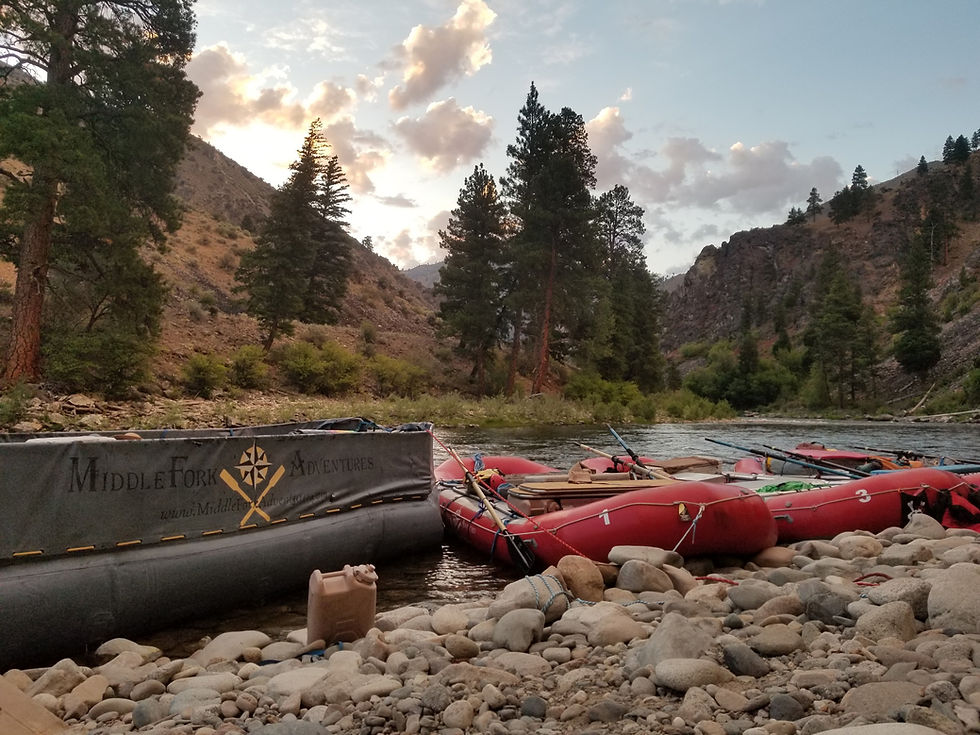
Best Fly Patterns for the Middle Fork Salmon River: A Season-by-Season Guide for Trout

Ask a room full of anglers about the best flies for the Middle Fork of the Salmon and you’ll get a list that looks like every other Western trout river: Parachute Adams, Elk Hair Caddis, a Pheasant Tail, a Woolly Bugger. Those flies work here, and they’re in our boats every season. A list alone misses the part that actually decides your day on this river, though.
On a multi-day float, you aren’t fishing one spot. Depending on water levels, a Middle Fork trip covers somewhere between 75 and 100 miles, launching at Boundary Creek or Indian Creek and finishing at Cache Bar. The river you see on day one is not the river you see on day five, and the river in early June barely resembles the one in September. Your fly box should be built around that.
Before any of the details, know that the Middle Fork and its tributaries are trout catch-and-release only, with no bait allowed and barbless hooks required.
The Short Answer: A Core Middle Fork Fly Box
If you only pack one box, these patterns cover most of what you’ll see from June through September:
Dry flies: Parachute Adams, Elk Hair Caddis, Yellow Sally, and a Comparadun or Sparkle Dun for slower, glassier water
Nymphs: Pheasant Tail, Copper John, and Zebra Midge in sizes 12 to 18
Streamers: Woolly Bugger, a sculpin pattern, and a Muddler Minnow, mostly in olive, brown, or black
Carry a few sizes of each and you’ll be ready for most situations. The rest of this guide is about when to tie which one on, and why.
What Seasons Look Like on the Middle Fork
Most seasonal fly guides are organized by calendar month. On the Middle Fork, we’d argue that flows and launch point tell you more about what to fish than the date does. A cold, high June and a quick-melting June can fish like two different rivers.
Flows and Put-In Shape the Fishing
The Middle Fork is a snowmelt river. Early in the season, water is high, fast, and cold, and trips usually launch from Boundary Creek. As summer goes on and levels drop, most trips start lower on the river, often with a scenic flight into Indian Creek.
That shift matters for anglers. Once most summer traffic starts launching lower, the upper section from Boundary Creek down sees very little fishing pressure from mid-July on. It’s a big reason our Middle Fork fly fishing trips on the upper river run at the end of summer.
If you like to check conditions before a trip, the USGS gauge at Middle Fork Lodge shows current flows. Your guide reads the same water every day, but the gauge is a useful way to see how the river is trending.
Fishing From a Moving Raft vs. Wading at Camp
Most fly lists skip the fact that on a float trip, a lot of your fishing happens from a boat moving downstream. You get a few seconds to put a fly in the seam behind a boulder before you’re past it. That favors flies that float well, show up on the water, and don’t need a perfect cast to work.
Wading is a different game. In the afternoons and evenings around camp, or on a side creek, you can slow down, watch the water, and fish more deliberately. Small dries and carefully fished nymphs tend to shine there.
On our fishing-focused trips, each boat carries two anglers and a dedicated guide. Your guide positions the raft so you get good drifts instead of rushed ones, which makes a real difference from the boat.

Early June: Fishing High Water
Early June on the Middle Fork is about big, fast water. Our High Water, High Adventure trips run in this window, and they’re built around paddle-raft teamwork and technical Class IV rapids. Fishing is a bonus on those trips, not the main event.
If you do bring a rod, think low and slow. Trout in high, cold water tend to hold tight to the banks and in softer water behind rocks, out of the main current. Weighted nymphs like a Copper John or Pheasant Tail, fished close to the edges, are a good bet. Streamers can also draw strikes from fish sitting in that slower edge water.
Dry flies can be tough this early. The current is often too fast, and snowmelt can cloud the water. When clarity is down, brighter streamer colors tend to show up better than the natural tones you’d use later in summer.
Late June Through July: The River Settles In
As runoff tapers off, the river clears and drops into a more fishable rhythm. Insect activity picks up, and dry flies start pulling their weight.
When Dry Flies Start Earning Their Spot
The Middle Fork has strong mayfly, caddis, and stonefly hatches over the course of the season. Parachute Adams, Elk Hair Caddis, and Yellow Sallies are proven patterns here. Westslope cutthroat hold in riffles and slower pools, and they often rise willingly to a well-placed dry.
Matching the hatch matters, but don’t overthink it. Look at what’s on the water or flying over it, and pick something close in size and color. A drag-free drift will catch more fish than a perfect imitation skating across the surface. Mending upstream to keep your fly drifting naturally is one of the most useful skills you can bring.
The Dry-Dropper Rig for Covering Water
From a moving boat, the dry-dropper rig is hard to beat. Tie on a buoyant dry fly, then hang a small nymph a foot or two below it off the bend of the hook. The dry acts as your indicator and still catches fish on top, while the nymph covers trout that won’t come up.
You’re fishing two levels of the water column on every drift. When you float past dozens of good-looking seams in an afternoon, that efficiency adds up. An Elk Hair Caddis over a Pheasant Tail is a simple, reliable place to start.
August: Lower Water and Warmer Days
By August, the Middle Fork is lower, clearer, and warmer. Many August trips begin with a flight into Indian Creek and run about 75 miles, so you’ll spend more time on the middle and lower river.
Clear, low water makes trout more cautious. Smaller flies, lighter tippet, and careful presentations start to matter more than they did in June. A size 16 or 18 Parachute Adams, or a Sparkle Dun in slow water, can work where a bigger fly gets refused.
Timing matters too. Trout are usually most active in the cooler early morning and evening hours. During the heat of midday, fish often slide into deeper water or shade. That’s a good time to switch to a nymph and work the deeper runs, or to put the rod down for a swim and come back to the dries in the evening.
September and Fall: The Middle Fork’s Fishing Window
If you’re planning a trip mainly to fish, this is the part of the season we get most excited about. It’s when we run our dedicated fishing trips, and the timing isn’t an accident.
Why Late Season Fishes Well
By late summer, the fish have had a break from the pressure of the busy season. Days are getting shorter, which signals trout to feed and get ready for winter. Add cooler water, fall color along the canyon, and far fewer boats, and it’s a very different trip from July.
Streamers come back into play as water temperatures drop and trout feed more aggressively. Woolly Buggers, sculpin patterns, and Muddler Minnows worked around rock walls, submerged logs, and deep pools can turn up some of the larger fish of the trip. Vary your retrieve, mixing slow strips with short, quick ones and an occasional pause. Low light in the morning and evening, or on overcast days, is prime streamer time.
Dry flies still have their place in fall. On calm afternoons, keep an Adams or caddis pattern rigged on a second rod so you can switch quickly when fish start rising.
Upper River, Lower River, and the Side Creeks
Our fishing trips are flexible. We offer 4- or 5-day trips on the Upper Middle Fork and 3- or 4-day trips on the Lower Middle Fork, or you can combine the two for up to 8 days of fishing.
The lower river also opens up some of our favorite water: the side creeks. Loon Creek, Camas Creek, and Big Creek see very little fishing, and they’re the kind of places where you can spend an entire afternoon working slowly upstream. Lighter rods, small dries, and careful wading suit these tighter spots.
Fall is also chukar season in Idaho. If you’d like to split your days between bird hunting and fly fishing, our Cast & Blast trips are built around that combination.
Bull Trout: What to Know When You’re Fishing Streamers
Bull trout live in the Middle Fork, and they’re protected. If you hook one, it needs to be released right away.
Streamers are the flies most likely to draw a bull trout, so be ready before you start stripping. Keep the fish in the water as much as possible. Wet your hands before handling it to protect its slime coat, and use a rubber mesh net if you have one. To release it, hold it gently facing into the current until it swims off on its own.
Your guide will help with handling, especially if you’ve never landed one. Seeing a bull trout up close is a treat, and the best way to respect it is a quick, gentle release.
Packing a Compact, Compliant Fly Box
You’ll be a long way from any fly shop once you launch, so pack with intention.
Pinch Your Barbs Before You Leave Home
Debarb your entire fly box before the trip. It’s much easier at a kitchen table than in a moving boat, and it means every fly you tie on is already legal. Flat-jawed pliers or forceps get it done in a few minutes. To double-check the rules yourself, the Idaho Fish and Game fishing seasons and rules list the Middle Fork’s special regulations. You’ll also need a valid Idaho fishing license.
Keeping Fishing Gear Inside the 30-Pound Limit
We ask guests to keep personal clothing and gear to 30 pounds so everything fits safely in the boats. That’s one more argument for a single compact fly box over three overstuffed ones.
A 9-foot 5- or 6-weight rod handles most Middle Fork trout fishing, and a 4-piece travel rod packs more easily. A floating weight-forward line covers dries, nymphs, and most streamer work. Add tippet, floatant, a few split shot, nippers, forceps, and polarized sunglasses, and you’re set. Our Middle Fork packing list covers everything else, including the camp and river gear we provide.
New to fly fishing? Our guides teach the basics and have equipment for beginners. If fishing is a big part of why you’re coming, dedicated fly-fishing boats can be added to most trips for an additional cost. Give us a call and we’ll talk through the options.
For more on techniques, gear, and where trout hold, see our complete Middle Fork Salmon fishing guide.
Frequently Asked Questions
What flies work best on the Middle Fork of the Salmon River?
Parachute Adams, Elk Hair Caddis, and Yellow Sallies are reliable dry flies, with Pheasant Tails, Copper Johns, and Zebra Midges for nymphing. Woolly Buggers, sculpin patterns, and Muddler Minnows cover streamer fishing. All of them need to be barbless.
When is the best time to fly fish the Middle Fork Salmon?
Late summer into early fall is the strongest window for most anglers. Flows are lower, fishing pressure drops off, and trout are feeding ahead of winter. July can also fish well once runoff settles.
Do you need barbless hooks on the Middle Fork Salmon River?
Yes. Idaho Fish and Game requires barbless hooks on the Middle Fork and its tributaries, and bait isn’t allowed.
Can you keep fish on the Middle Fork of the Salmon?
Not trout. All trout are catch-and-release, and bull trout are protected and must be released immediately. Check current Idaho Fish and Game regulations for the full details.
What size fly rod should I bring for the Middle Fork?
A 9-foot 5- or 6-weight works for most trout fishing here. The 6-weight gives you a little more control with streamers and heavier nymph rigs.
Are there salmon in the Middle Fork of the Salmon River?
Chinook salmon and steelhead are in the river system, but they’re more common downstream and only occasionally reach the Middle Fork. On a trip, you’re fishing for trout.
Fish the River You’ll Actually Float
A fly box that changes with the water will always outfish one built from a generic list. High water rewards patience and weight near the edges, summer brings the surface to life, and fall hands you streamer water and quiet side creeks with hardly another boat in sight.
This is the river we love most, and sharing it with anglers is one of the best parts of what we do. If you’re thinking about a fishing trip, call us at 208-741-3675. We’ll help you pick the timing, trip length, and stretch of river that fit how you like to fish. Come fish with us.
About the Author
Allie Vostrejs Newman | Manager + Guide

Allie has spent most of her adult life guiding rivers across the American West, and she brings a calm, capable presence to every Middle Fork trip. She has a cool leadership style, sharp organization, and deep knowledge of the Frank Church–River of No Return Wilderness. She’s also a standout in the river kitchen, known for cooking creative meals for big groups and keeping trip logistics running smoothly so guests can focus on the fun.
Allie holds a Master’s in Landscape Architecture and a B.A. in Environmental Science, and she’s a go-to resource for the natural history and ecology of the Middle Fork. You’ll often find her with a sketchbook in hand or dreaming up an off-the-beaten-path hike or side adventure. Off the river, she spends time with her husband Daniel, their son Samuel Brooks, and their dog Wally.