How Much Does a Guided Idaho Rafting Trip Cost?


If you're comparing guided rafting trips in Idaho, the honest answer is that a multi-day wilderness trip typically runs somewhere between $2,950 and $4,000 per person, depending on when you go and what kind of trip you book. That's a wider range than most people expect walking in, and the reason for it has less to do with which outfitter you choose and more to do with timing, trip length, and what's built into the experience.
We'll walk through what actually drives that number, what's usually included, what tends to get left off the price tag, and how to think about the cost in a way that actually helps you plan.
The Real Range for a Guided Idaho Rafting Trip
Pricing for a guided Idaho rafting trip depends heavily on the type of river experience you're booking. A short recreational float near a town is a different product than a six-day wilderness expedition through a federally protected river corridor, and the price reflects that.
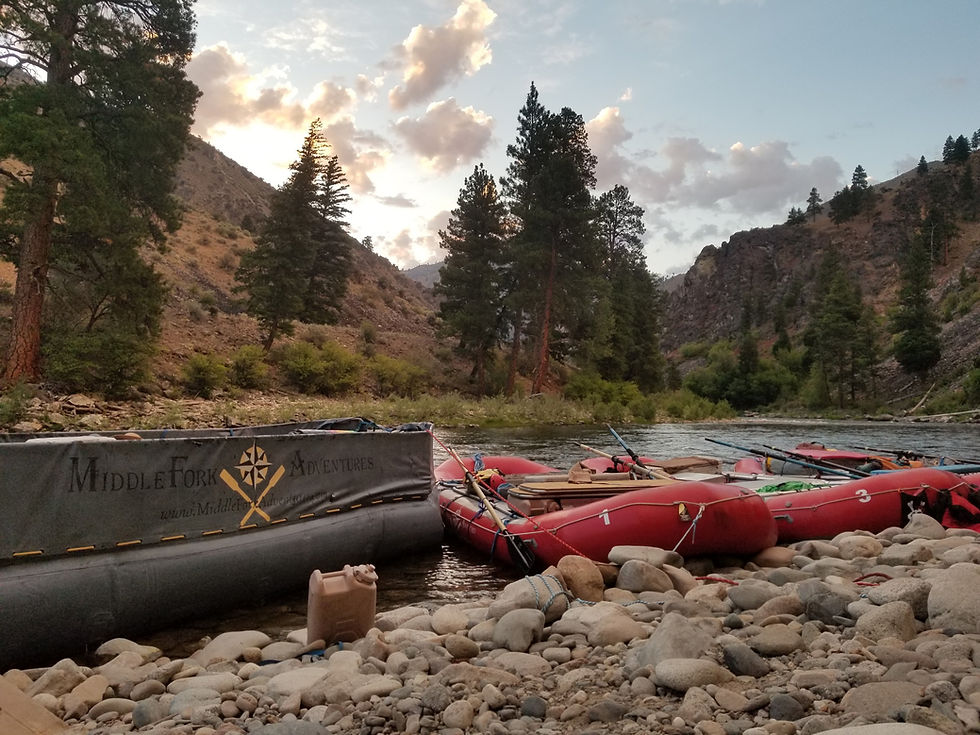
For multi-day trips on rivers like the Middle Fork of the Salmon, per-person pricing generally sits in the low-to-mid thousands. Using Middle Fork Adventures' published rate calendar as a real-world example, a standard six-day, five-night trip currently ranges from around $2,950 during early-season high water dates up to $3,850 during peak mid-summer weeks, with specialty trips like a fall fishing and hunting combo running closer to $4,000.
That's worth pointing out because a lot of outfitter sites don't publish real numbers at all. They ask you to call for a quote. A published calendar with actual dollar figures attached to actual dates is genuinely useful when you're trying to budget, so it's worth looking for when you're comparing options.
What Actually Moves the Price
Trip Length
This is the biggest lever. A half-day or full-day float trip is priced by the hour, essentially. A multi-day wilderness trip is priced as a full vacation package, covering days of guiding, camping, and meals in a remote setting. Comparing the cost of a day trip to a six-day trip isn't really a fair comparison even though they are both technically labeled as “rafting trips”.
Season and Water Levels
River conditions change through the season, and pricing often follows. Early June trips on the Middle Fork run during high water, when flows are fast and the whitewater is more technical. Later in the summer, water levels drop and the river mellows out. Prices can shift across these windows, and it's not always the busiest month that costs the most. On MFA's current calendar, for example, early June trips were priced lower than the peak mid-summer weeks, even though early season trips involve more demanding water.
Trip Type or Specialty Focus
A standard rafting trip, a fishing-focused trip, and a combined hunting-and-fishing trip aren't built the same way. Fishing trips typically run smaller guide-to-angler ratios, sometimes two anglers per dedicated guide. A trip like Cast & Blast, which pairs chukar hunting with fly fishing, tends to sit at the top of the price range because of the added logistics, equipment considerations, and specialized guiding involved.
Group Size and Private Charters
Private and custom charter trips are priced individually rather than off a set calendar, since the cost depends on group size, dates, and what the group wants out of the trip. If you're planning a private launch, expect a conversation rather than a fixed number.

What's Typically Included in That Price
For a full-service guided trip, the price usually covers more than just a seat in a raft. On a standard multi-day Middle Fork trip, that generally means:
Professional guide staff for the duration of the trip
Camping equipment, including tents, sleeping gear, and dry bags
Trip logistics and permit handling for the protected river corridor
A scenic charter flight to the alternate put-in point, when water levels require launching from Indian Creek instead of Boundary Creek
That last point matters more than people expect. Because put-in location on the Middle Fork depends on water levels, a flight can be part of the trip rather than an add-on, and it's worth confirming with any outfitter whether that's baked into their price or billed separately.
What's Usually Not Included
This is where people get caught off guard, so it's worth reading the fine print on any quote. A few things commonly sit outside the base trip price:
Recreation fees. Rivers managed under federal wild and scenic river designations often carry a per-person, per-day recreation fee that outfitters pass through separately rather than folding into the trip price.
Personal gear beyond what's provided. Most outfitters supply the bulk of camping and river gear, but you'll still want to check the packing list for what you're expected to bring yourself.
Add-on equipment. Specialty gear, like a dedicated fly fishing boat setup, is sometimes available for an additional cost rather than included by default.
Travel to the launch point and home from the takeout. Getting yourself to the departure town is on you.
Travel insurance. Given the cancellation policies common in this industry, many outfitters recommend or offer optional travel protection separately from the trip cost.
None of these are hidden exactly, but they're easy to forget when you're just looking at a headline number.
Why the Same Trip Length Can Cost Differently by Month
Here's something that trips people up: two trips can be the same length, run the same river, include the same meals and gear, and still carry different price tags depending on the calendar date. It’s not intended to be a pricing gimmick; it reflects real differences in water conditions, staffing, and demand across the season.
Early summer high water trips involve more technical whitewater and a more active, team-paddling experience. Late summer trips run on lower, warmer water with a different pace entirely. Fishing and hunting trips build in different guide ratios and specialized logistics. All of that shapes cost even when the core structure (a six-day, five-night wilderness trip) stays the same.
Common Misconceptions About Rafting Trip Pricing
"Cheaper means a lesser trip." Not necessarily. A lower price during an early-season window often reflects timing and conditions, not a stripped-down version of the experience.
"A day trip price times six days equals a multi-day trip price." It doesn't work that way. Multi-day wilderness trips include meals, full camping setups, remote logistics, and permitting for a protected river corridor, none of which apply to a short float.
"Every outfitter prices the same way." Some publish real rates tied to real dates. Others require a phone call before you get a number. That difference alone tells you something about how transparent the planning process is likely to be.
How Deposits and Payment Timing Affect Your Budget
Most guided trips require a deposit to hold your spot, with the remaining balance due closer to the trip date. On a typical Middle Fork trip, that's a 30 percent deposit at booking, with the balance due by March 1 ahead of the summer season.
It's also worth understanding the cancellation policy before you book. Because outfitters on rivers like the Middle Fork operate under a river management plan that limits the number of guests allowed each season, many can't offer refunds for guest cancellations the way a more flexible business could. That's a real budgeting consideration, not just fine print, and it's part of why travel insurance comes up so often in this space.

Frequently Asked Questions
Is rafting in Idaho expensive compared to other adventure trips?
It's comparable to other multi-day wilderness travel, not to a typical weekend trip. When you account for a week of guiding, meals, camping gear, and remote river logistics, the per-day cost lines up with other full-service outdoor vacations rather than a simple recreational outing.
Do rafting trip prices include food and camping gear?
On most full-service multi-day trips, yes. Meals and core camping equipment are typically part of the package. Always check the specific packing list, since personal items and certain specialty gear are usually left to the guest.
Why do prices vary by month for the same trip length?
Water levels, whitewater conditions, and trip focus (standard rafting versus fishing or hunting-specialty trips) all shift through the season, and pricing tends to follow those differences even when the trip length stays the same.
What additional fees should I plan for besides the trip price?
Recreation fees tied to the river's federal management, travel to and from the launch point, and optional add-ons like specialized fishing gear are common costs that sit outside the base price.
How far in advance do I need to book, and how do deposits work?
Popular dates on permitted wilderness rivers fill up well ahead of the season because guest numbers are capped by river management plans. A deposit at booking, with the balance due months before departure, is standard.
Are there ways to save on a guided Idaho rafting trip?
Booking early-season or late-season dates, when pricing tends to run lower than peak mid-summer weeks, is usually the most straightforward way to reduce cost without changing the length or quality of the trip.
Finding the Right Trip for Your Budget
The range in guided Idaho rafting prices isn't random. It tracks real differences in season, water conditions, and trip focus, and once you understand what's driving the number, comparing options gets a lot easier.
If you want to see exactly what a specific week costs before you commit to anything, check this season's dates and rates or reach out with questions about which window fits your budget and your crew.
About the Author
Allie Vostrejs Newman | Manager + Guide

Allie has spent most of her adult life guiding rivers across the American West, and she brings a calm, capable presence to every Middle Fork trip. She has a cool leadership style, sharp organization, and deep knowledge of the Frank Church–River of No Return Wilderness. She’s also a standout in the river kitchen, known for cooking creative meals for big groups and keeping trip logistics running smoothly so guests can focus on the fun.
Allie holds a Master’s in Landscape Architecture and a B.A. in Environmental Science, and she’s a go-to resource for the natural history and ecology of the Middle Fork. You’ll often find her with a sketchbook in hand or dreaming up an off-the-beaten-path hike or side adventure. Off the river, she spends time with her husband Daniel, their son Samuel Brooks, and their dog Wally.