Middle Fork Rafting Safety Tips You Must Know


If you’re researching outfitters, you’re already doing the smartest thing you can do for your trip: prioritizing safety. Middle Fork whitewater rafting trips are one of the greatest multi-day trips in the U.S., and it’s also true wilderness. No roads, limited access, cold water, big scenery, and real whitewater. That combination is exactly why Middle Fork Rafting Safety Tips matter more here than on a roadside day float.
At Middle Fork Adventures, we believe safety isn’t a speech you sit through once on launch day. It’s a system: how we plan, how we train, how we rig, how we communicate, and how we make decisions when conditions change. Below are the safety fundamentals we teach every crew, plus the outfitter “green flags” you should look for when choosing who to trust with your Middle Fork trip.
Middle Fork Rafting Safety Tips at a glance
If you only remember 10 things, make it these:
Wear your PFD anytime you’re on or near the river, and wear it snug.
Dress for the water temperature, not the air temperature.
Learn and respond to paddle commands quickly and consistently.
Know what to do if you swim: feet up, face downstream, don’t stand in fast water.
Keep hands clear of ropes/frames when you’re in rapids.
Avoid “hero moves.” In wilderness rafting, simple + steady wins.
Fuel and hydrate like it’s part of the plan (because it is).
Keep essentials protected (meds, inhalers, EpiPens, glasses).
Respect the guide’s calls on scouting, portaging, and stopping early.
Choose an outfitter that can clearly explain their safety systems, without getting vague.
Why Middle Fork safety is different than typical rafting
You’re far from easy help
If you look at a Middle Fork river map, you'll see that you're pretty committed once you launch. That’s not scary, it’s just reality. Trips in the "River of No Return Wilderness" demand more prevention: strong daily routines, conservative decision-making, and a crew that works together.
Cold water changes everything
Cold water reduces coordination and decision-making fast. Even in warm weather, a swim can feel like the temperature dropped 30 degrees instantly. That’s why proper layering, fast recovery, and a calm swim response are core parts of our Middle Fork Salmon River rafting safety tips.
Multi-day fatigue is real
You’ll paddle, hike, set up camp, sleep outside, and do it again. Tired people make slower decisions, stumble more, and get cold faster. A good outfitter plans the pace, on the water and in camp, to keep guests feeling strong all week.

Pre-trip safety: what to do before you hit the river
Choose the right trip window for your group
Different times of season can feel like different rivers. Higher flows often mean bigger features and colder water. Lower flows can mean more technical moves and longer days. Neither is “better”, but one may be better for your group.
When you talk to an outfitter, you want to hear thoughtful questions like:
“Who’s in your group and what’s your experience?”
“How comfortable are you with cold water?”
“What kind of trip do you want, more paddle-focused or more relaxed?”
“Any medical considerations we should plan around?”
If an outfitter doesn’t ask, that’s a signal.
Get your gear dialed (and don’t wing footwear)
What you wear is safety equipment. On a wilderness river, your clothing isn’t about style; it’s about warmth, traction, and preventing avoidable injuries.
Our top priorities:
Footwear with real traction (for wet rocks, boat entry/exit, and camp)
Sun protection (hat, sunglasses with retention, sunscreen)
Layers that still work when wet (avoid cotton as a base layer)
A secure system for essentials (dry bags + labels)
Tell us what we need to know
We want to know about anything that could affect your safety or comfort:
asthma, allergies, anaphylaxis
medications (daily meds, blood thinners, etc.)
past injuries or mobility issues
dietary needs that impact energy levels
This isn’t “extra paperwork.” It’s how we plan proactively.
On-the-water fundamentals: safety that actually prevents incidents
1) Your PFD is non-negotiable, and fit matters
A PFD (Personal Flotation Device), aka "life jacket," only helps if it’s worn and secured. We check fit at the start and re-check if we change layers.
Fit rule of thumb: If we lift the shoulder straps and the PFD slides up near your ears, it’s too loose.
2) Learn paddle commands early (and respond fast)
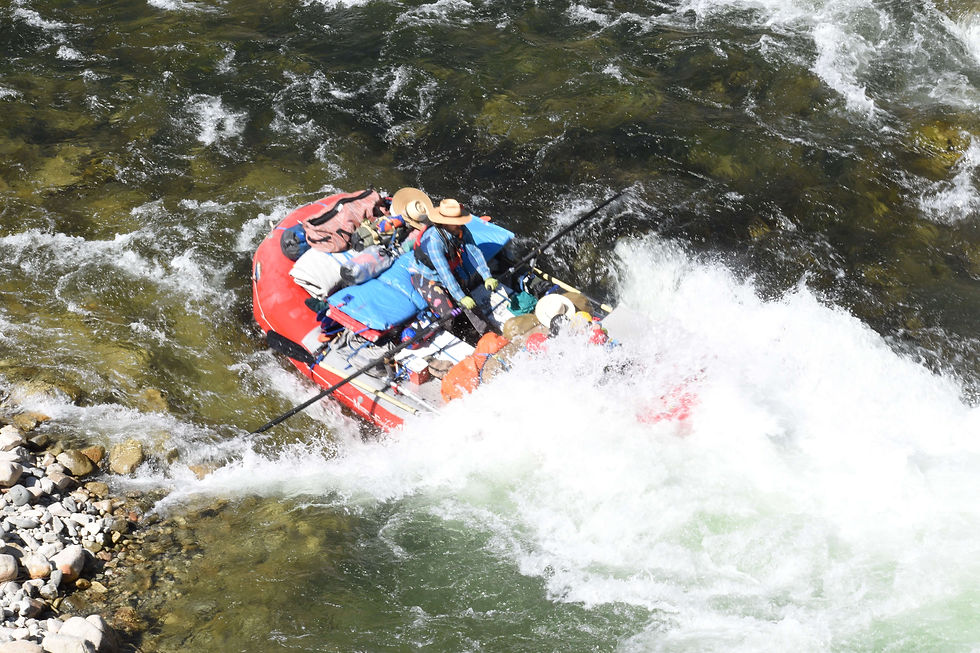
In whitewater, timing matters more than strength. Clear, consistent responses keep the boat stable and predictable.
Typical commands you’ll hear:
Forward paddle
Back paddle
Stop
Get down (lower your center of gravity for stability)
High side (shift weight to prevent a flip)
If you’re new, don’t stress, our job is to teach and coach. Your job is to listen and commit.
3) Use the “one hand for you, one hand for the boat” rule
In rapids, we want you connected and balanced:
One hand on a secure hold (or paddle in a stable position)
One hand available for bracing/repositioning as needed
We’ll show you the best holds on our boats and how to keep your grip strong without getting your fingers into risky spots.
4) Keep ropes and moving gear out of your hands
Frames, lines, and gear are essential ,but they can be hazards if grabbed at the wrong moment. In moving water:
Don’t wrap rope around your hand
Don’t grab loose lines
Keep fingers clear of pinch points on frames
We rig to reduce loose ends, and we still coach everyone to keep hands in safe zones.
5) Respect the guide call, especially around scouting
Good guiding includes saying “not yet,” “let’s look,” or occasionally “we’re walking this.” On the Middle Fork, scouting isn’t hesitation; it’s professionalism. We scout when it makes sense, we set safety where appropriate, and we run lines that match the crew and conditions.

If you swim: what to do (and what NOT to do)
Most guests' swims happen because they choose to. But sometimes it can happen unexpectedly. Everyone should know what to do just in case, because a calm, correct response makes rescue faster and safer. Swimming can look extremely different too, depending on the Middle Fork Salmon River flows for your trip. Don't worry, we cover this in the pre-trip safety talk too :)
The whitewater swim position
Feet up, toes out (protects your legs/ankles from rocks)
Face downstream so you can see and steer
Use your arms to backstroke toward the boat or an eddy when directed
Do not stand up in fast water
Standing up too early is how foot entrapments happen. If you can’t see the bottom clearly and the water is moving with force, stay in the swim position until a guide tells you otherwise.
How we’ll get you back in
Depending on the situation, we may:
pull you to the boat and help you climb back in
instruct you to swim to shore/eddy
use a throw bag (rope rescue)
Before we launch, we teach what these rescues look like so it’s familiar if it ever happens.
Camp safety: the part most people forget (but shouldn’t)
Multi-day rafting safety isn’t only about rapids. Camp routines are where most preventable mishaps happen: slips, burns, dehydration, and nighttime chills.
Stay warm early (don’t “wait to get cold”)
If the sun drops and you’re still in damp layers, you’ll lose heat fast. Change into dry clothes sooner than you think you need to.
Hydration + food = stability and energy
Dehydration and low calories show up as:
headaches
poor balance
irritability
feeling chilled
slower reaction time
We build steady meals and snacks into the day, and we encourage guests to eat and drink consistently (especially when it’s hot or windy).
Fire and kitchen awareness
Campfires and stoves are amazing, and they’re also the most common source of small injuries. Move deliberately, wear shoes, and give the kitchen space.
Headlamps at night
Most camp stumbles happen after dark. Keep your headlamp accessible and use it.
Outfitter safety checklist: how to choose the right team
Since your goal is to find the best outfitter, here’s what we recommend you ask any company you’re considering. The “right” answers sound specific, not salesy.
1) “How do you brief guests and reinforce safety all week?”
Look for: structured safety orientation + ongoing coaching (not just a one-time talk).
2) “What’s your decision-making process when conditions change?”
Look for: clear examples of conservative calls, scouting practices, and how they adapt to water/weather.
3) “How do you manage communication between boats?”
Look for: defined systems, boat spacing, guide roles, and a plan for keeping the group together.
4) “How do you handle medical issues in a wilderness setting?”
Look for: comfort discussing protocols, guest communication, and realistic preparedness (not vague promises).
5) “What’s included that directly improves safety and comfort?”
Look for: quality PFDs, proper thermal layers guidance, thoughtful camp systems, and trip pacing.
At Middle Fork Adventures, we’re happy to walk you through our approach and explain the “why” behind what we do, because safety shouldn’t be mysterious. It should be understandable.

Middle Fork rafting safety tips FAQ
“Do I need rafting experience to do the Middle Fork?”
No. Many guests are first-timers. The keys are a good outfitter, a willingness to learn, and being honest about comfort level and fitness. We coach constantly, before rapids, during the day, and throughout the week.
“Is it safe for experienced paddlers too?”
Absolutely. Experienced guests often appreciate a team that runs clean systems: strong communication, smart scouting decisions, and well-executed lines. Safety and fun aren’t opposites; they’re partners.
“What’s the biggest safety mistake people make?”
Assuming it’s “just a vacation” and checking out mentally. The Middle Fork is fun, but it still demands attention: wearing your PFD correctly, responding to commands, staying fueled, and speaking up early if you’re cold or tired.
“What should I do if I’m nervous?”
Tell us. Seriously. Nervous guests often do great because they listen closely. Our job is to teach, set expectations, and build confidence through clear instruction and smart decisions.
The bottom line
The Middle Fork rewards preparation. The safest trips aren’t the ones where nothing unexpected happens; they’re the ones where the group and guide team are ready, communicate well, and handle the little stuff early.
If you’re comparing outfitters right now, use these Middle Fork Rafting Safety Tips as your filter. Ask direct questions. Look for direct answers. And choose the crew that makes you feel informed, not pressured.
Want to talk through your trip dates and group experience level? Reach out and we’ll help you choose the right window, set expectations, and make sure you feel confident before you ever step into the boat.
About the Author
Allie Vostrejs Newman | Manager + Guide

Allie has spent most of her adult life guiding rivers across the American West, and she brings a calm, capable presence to every Middle Fork trip. She has a cool leadership style, sharp organization, and deep knowledge of the Frank Church–River of No Return Wilderness. She’s also a standout in the river kitchen, known for cooking creative meals for big groups and keeping trip logistics running smoothly so guests can focus on the fun.
Allie holds a Master’s in Landscape Architecture and a B.A. in Environmental Science, and she’s a go-to resource for the natural history and ecology of the Middle Fork. You’ll often find her with a sketchbook in hand or dreaming up an off-the-beaten-path hike or side adventure. Off the river, she spends time with her husband Daniel, their son Samuel Brooks, and their dog Wally.