Camping Along the Middle Fork of the Salmon River: What to Know Before You Go

Updated: Jul 22

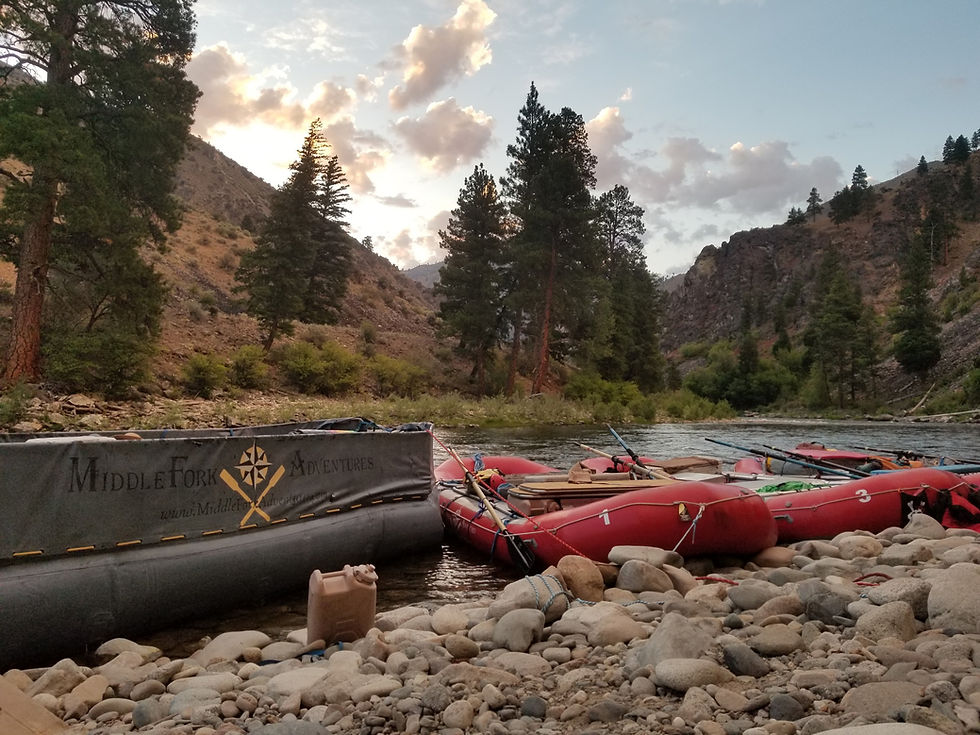
Most campgrounds have a check-in process, a site number on a post, and a parking spot next to your tent. The Middle Fork of the Salmon River is not quite like that. Camping here looks more like pulling your boats to a sandy beach at the end of a long day on the water, unloading gear, and sleeping under a sky with no light pollution for miles in any direction. There are no drive-in sites. No reservation links you pull up on your phone the week before.
What there is, instead, is one of the most carefully managed wilderness camping systems in the American West, administered by the U.S. Forest Service along a 100-mile permitted corridor through the Frank Church–River of No Return Wilderness. Understanding how it works and where the best spots are is the first step in planning any kind of time on this river.
Why Camping on the Middle Fork Works Differently
The Middle Fork was designated as one of the original eight Wild and Scenic Rivers in the country in 1968. That designation matters in practical terms: the entire floating section, from Dagger Falls to the confluence with the Main Salmon River, is a permit-controlled corridor. You don't just show up and camp wherever looks good.
The Forest Service manages a list of named, designated campsites along the route. Each has a capacity based on water level and group size, and camps are assigned in advance by email as of the 2025 season. When you receive your permit, you'll get campsite assignments based on your group size, the water level at the time of your trip, and what's available for your dates.
A few rules apply to everyone camping in this corridor, regardless of group size. All waste, including human waste, must be packed out. Fires have to be contained in a fire pan. Ash must be packed out. Within the quarter-mile-wide river corridor, Leave No Trace isn't a suggestion; it's a permit requirement.
The Camp Assignment Process
Historically, campsite assignments on the Middle Fork happened the day before your launch in a round-robin process at the put-in. That changed in 2025. Permits holders now receive camp assignments via email before their launch date. If you pick up a cancellation permit fewer than 14 days before launch, the Forest Service recommends contacting the River Office directly to coordinate camps.
The Salmon-Challis National Forest maintains an updated printable campsite list that shows capacity by water level (low, medium, high) and typical use levels by month. That list is worth downloading early in your planning process.
Before You Launch: Boundary Creek Campground
Most multi-day trips on the Middle Fork begin at Boundary Creek, and nearly every group camps here the night before launch. Sitting at roughly 6,280 feet in lodgepole pine, the campground serves as a staging ground for boaters, with toilet facilities, a long-term parking area, and access to the boat ramp. The ramp itself is a steep wooden slide into a large eddy, and the area fills up fast on peak-season launch days. Expect other groups rigging nearby.
An overflow campground at Dagger Falls sits a short distance upriver and is a useful option when Boundary Creek is crowded.
The put-in location can shift based on water levels. When conditions make Boundary Creek impractical, many groups fly into Indian Creek, located about 25 miles downstream. Indian Creek has a riverside beach with camping and outhouse facilities, and the Forest Service typically staffs the station from early May into October. The decision between Boundary Creek and Indian Creek is water-level dependent and not something you can lock in far in advance.

Middle Fork Campsite List by River Section
The Forest Service maintains a complete campsite list for the corridor, covering roughly 100 miles from the put-in area to Cache Bar. Below is a breakdown of notable camps by river section, pulled from the current USFS campsite list. Capacity varies by water level and group size, and wildfire history can affect availability of specific sites in any given season.
Upper Section: River Miles 0–25 (Boundary Creek to Indian Creek)
This stretch covers the first full day or two on the river for most groups launching from Boundary Creek. The upper section has a mix of smaller, more intimate camps and larger bars capable of handling bigger groups.
Teepee Hole (mile 0.7, river left) A small camp right out of the gate, capacity of 10 at most water levels. Low use in both June and July/August, which can make it a quieter option for groups launching later in the day.
Big Bend (mile 6.5, river right) One of the larger upper camps, capacity 30, with layover availability. Mid-level use in both early and peak season.
Trail Flat (mile 6.9, river left) Capacity 30 and close to Trail Flat Hot Springs, one of the most recognized thermal pools on the corridor. No layover available at this camp.
Elkhorn Bar (mile 8.2, river right) Capacity 30 at all water levels, layover available. Mid-level June use, mid-level July/August use.
Joe Bump Cabin (mile 11.8, river left) A high-use June camp with a capacity of 30. Historical structure adds some character to the site. No layover available.
Sheepeater (mile 13, river left) Consistently high June use, capacity 30, no layover. One of the more popular upper camps for early-season trips.
Pistol Creek Camp (mile 21.4, river left) Capacity 30, layover available, mid-level use in both months. Named for Pistol Creek, which enters the Middle Fork here.
Indian Creek Beach / Indian Creek Camp (miles 24.7 and 26.2, river left) The fly-in staging area for groups launching from Indian Creek, with camping available on the large riverside beach. Indian Creek Camp proper sits a couple miles downstream and has capacity 30 with layover availability.
Middle Section: River Miles 25–60 (Indian Creek to Tappan Falls Area)
This is where the canyon starts to deepen, and the river corridor becomes increasingly remote. Several of the most used camps in the entire system are in this stretch.
Pungo Creek (mile 27.4, river left) Capacity 30, layover available, mid-level use in both months.
Little Soldier (mile 30.8, river right) High June use, capacity 30, layover available. A popular camp on the Marble Creek stretch.
Sunflower (mile 32.6, river right) Capacity 8, mid-level use. Located near Sunflower Hot Springs, one of the most visited thermal spots on the river. Small group capacity means availability is limited.
Lost Oak (mile 32.6, river left) Shares the same river mile as Sunflower and has capacity 30 with layover availability, making it a companion camp option for larger groups wanting proximity to the hot springs.
State Land Left / State Land Right (miles 34.4 and 34.6) Two high-use camps near the Middle Fork Lodge gauge location, each with capacity 30. Among the most consistently used sites in peak season.
Whitey Cox (mile 46.2, river right) Capacity 30, mid-level June use, high July/August use. No layover available.
Big Loon (mile 49.3, river right) Marked as "Very High" use in June and "High" in July/August, which reflects how central it sits in the typical five-to-six-day trip schedule. Capacity 30, no layover.
Lower Grouse (mile 56.5, river right) High use in both months, capacity 30, no layover.
Tappan Island (mile 57, center) Capacity 30, low June use, mid July/August use. Layover available, making it a good option for groups with flexibility in their itinerary.
Tappan Falls (mile 57.9, river left) Smaller capacity at 10, but layover available. The falls are a notable feature in this section.
Lower Section: River Miles 60–Cache Bar (Into the Impassable Canyon)
The lower river runs through the deepest and most dramatic part of the canyon. Access by land is essentially nonexistent through most of this stretch, which is part of what makes camping here feel genuinely off the map.
Johnny Walker (mile 60.6, river left) Capacity 30, layover available, mid-level use through the season.
Funston (mile 61.6, river left) No layover, mid to high use depending on month, capacity 30.
Little Pine (mile 71.4, river left) High use in both June and July/August, capacity 30, layover available. A well-positioned camp in the heart of the lower canyon.
Driftwood Flat (mile 72.1, river right) High June use, capacity 30, no layover.
Elk Bar (mile 79.6, river left) Capacity 30, mid-level use in both months. No layover. The Impassable Canyon walls are at their most striking in this section of the river.
Ship Island (mile 84.5, river left) Capacity 30, high use in both June and July/August. No layover. One of the most used lower camps.
Cradle Creek (mile 88.6, river right) High June use, capacity 30, no layover.
Otter Bar (mile 90.4, river right) Mid June use, high July/August use, capacity 30. No layover.
Cache Bar, the standard takeout at mile 99.7, sits about four miles past the confluence with the Main Salmon. Most groups take out here and shuttle back toward North Fork or Salmon, Idaho.
Hot Springs Worth Knowing
Two hot springs come up consistently in any conversation about camping on the Middle Fork: Trail Flat and Sunflower. Trail Flat sits near the upper section around mile 6.9, fed by thermal aquifers, and is one of the first significant off-river features on the trip for groups launching from Boundary Creek. Sunflower, near mile 32.6, is further into the trip and tends to be a natural rest stop in the middle section of the canyon.
Conditions at both can vary by water level and season. High flows can submerge or significantly alter access at certain spots. Any stop at a hot spring on a multi-day river trip is subject to the group's timing and goals for that day.

Planning a Guided Multi-Day Rafting Trip
For a lot of people researching this topic, the campsite logistics above are genuinely useful but also a little sobering. The Middle Fork permit lottery has drawing odds that can exceed 400 to 1 for prime dates. Camp assignments add another layer of coordination. The required gear list for a permitted trip (fire pan, ash container, porta-potty system, strainer, shovel, and bucket, among other things) reflects the seriousness of wilderness access here.
A guided multi-day rafting trip handles all of it. We run fully supported 6-day, 5-night trips through the Frank Church Wilderness, with the permit, camp logistics, gear, and meals all taken care of. Put-in is at Boundary Creek or Indian Creek, depending on water levels, and takeout is at Cache Bar. You bring your personal gear within the 30-pound limit, and the guides handle the rest.
For families, fishing-focused groups, or anyone who wants the full experience of this river without spending months managing the logistics, a guided trip is genuinely worth considering. Check available dates and rates to see what the current season looks like.
Frequently Asked Questions
How are campsites assigned on the Middle Fork of the Salmon River?
As of 2025, the U.S. Forest Service assigns camps by email in advance of your launch date. Previously, this happened the day before launch at the put-in in a round-robin process. Camp assignments are based on your group size, water level conditions, and availability for your specific dates. Permit holders who pick up cancellations within 14 days of launch should contact the River Office directly.
Can you camp anywhere along the Middle Fork, or only at designated sites?
Only at designated sites. The permitted corridor requires all camping to occur at Forest Service-assigned locations. The full campsite list is maintained by the Salmon-Challis National Forest and is updated each season.
Which campsites on the Middle Fork have hot springs nearby?
Trail Flat (mile 6.9) and Sunflower (mile 32.6) are the two most well-known hot springs locations along the corridor. Trail Flat is near the camp of the same name in the upper section; Sunflower sits near the Sunflower and Lost Oak camps in the middle section. Access can vary by water level and conditions.
How far in advance do you need to plan a camping trip on the Middle Fork?
For lottery-season dates (typically late May through Labor Day), the application period opens December 1 and closes January 31, with results announced in mid-February. For shoulder-season trips outside the lottery window, permits can be reserved through Recreation.gov on a first-come, first-served basis. High-demand dates fill quickly, so early planning is important.
What gear does the Forest Service require boaters to carry?
The permit requires a porta-potty system, fire pan, fire blanket, ash container, strainer, shovel, and bucket. All waste and ash must be packed out. Electric inflation devices are not permitted. Leave No Trace practices apply throughout the corridor.
Is camping included in a guided Middle Fork rafting trip?
Yes. Guided trips with Middle Fork Adventures include all camping gear: tent, sleeping bag, pillow, sleeping pad, cot, and camp chair. Camp is set up and broken down each day as part of the full-service model. You won't be managing campsite requests or packing out waste systems. That's handled on your behalf.
The Case for Just Getting on the River
If you've spent time reading through campsite lists, permit rules, and gear requirements, you already have a sense of what planning an independent Middle Fork trip actually involves. It's not impossible, and for experienced wilderness boaters, the process is part of the appeal. But for everyone else, a guided trip is a different kind of access to the same river.
Six days through the Frank Church Wilderness, sleeping on beaches, soaking in hot springs when conditions allow, and running Class II–IV whitewater through one of the most remote canyons in the lower 48. Our guides have been doing this long enough to know the river well. If you want to talk through what a trip would look like for your group, they love that conversation.
About the Author
Allie Vostrejs Newman | Manager + Guide

Allie has spent most of her adult life guiding rivers across the American West, and she brings a calm, capable presence to every Middle Fork trip. She has a cool leadership style, sharp organization, and deep knowledge of the Frank Church–River of No Return Wilderness. She’s also a standout in the river kitchen, known for cooking creative meals for big groups and keeping trip logistics running smoothly so guests can focus on the fun.
Allie holds a Master’s in Landscape Architecture and a B.A. in Environmental Science, and she’s a go-to resource for the natural history and ecology of the Middle Fork. You’ll often find her with a sketchbook in hand or dreaming up an off-the-beaten-path hike or side adventure. Off the river, she spends time with her husband Daniel, their son Samuel Brooks, and their dog Wally.